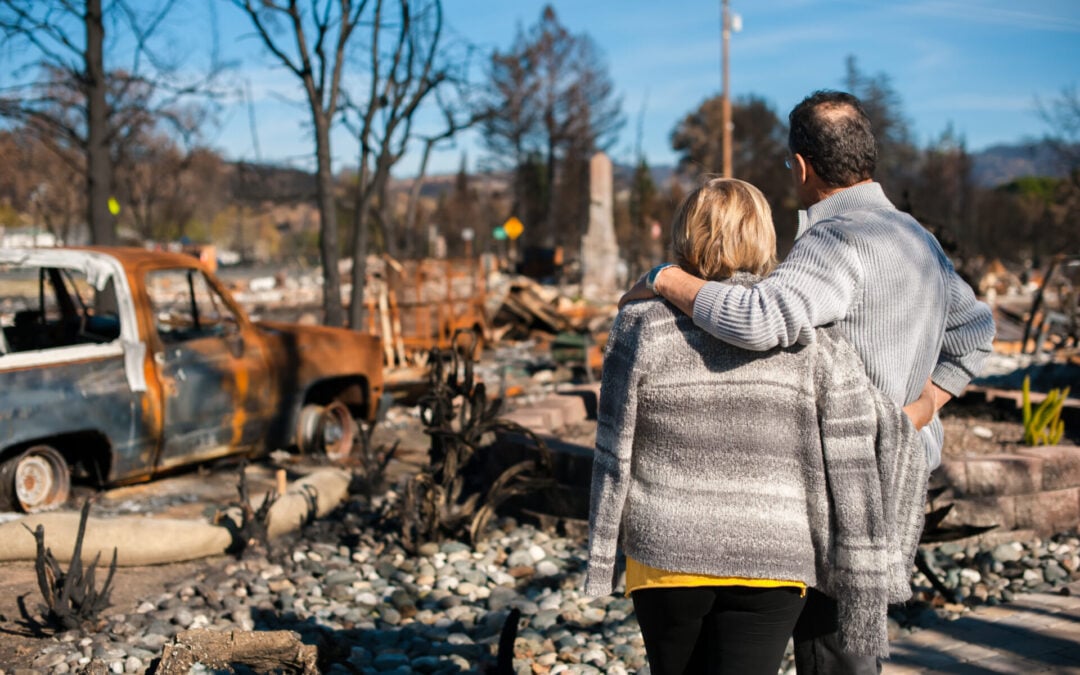
Hazard resilience is a whole-building issue. No framing material makes a structure disaster-proof, and life-safety performance depends on the building code, site conditions, engineering, connections, foundations, exterior assemblies, installation quality, and maintenance.
Cold-formed steel framing can be a useful part of that strategy because it is noncombustible, dimensionally stable, termite-resistant, and well suited to engineered load paths.
Fire and Wildfire Resilience
Steel framing does not ignite or add fuel to a fire. That can be valuable in fire-prone areas, but a steel-framed building is not fireproof. Roofing, cladding, windows, vents, insulation, interior finishes, defensible space, connections, and the complete rated assembly all affect performance. Steel also loses strength as temperatures rise, so fire-resistance design must address the entire assembly.
Wind Resistance
Steel framing can be engineered for applicable wind loads when the roof, walls, anchors, fasteners, sheathing, and foundation form a continuous load path. Performance depends on the project-specific design and connections rather than on the framing material alone.
Seismic Performance
Lightweight framing systems can reduce building mass, and steel members and connections can be designed as part of a code-compliant seismic system. Earthquake performance still depends on structural configuration, detailing, foundations, sheathing, connections, and the requirements for the specific site.
Durability, Moisture, and Termites
Steel does not rot and does not provide a food source for termites. It also does not swell or warp from moisture absorption. Moisture management remains essential because corrosion can occur when steel is repeatedly exposed to water or aggressive environments without appropriate protection.
Resilience Comes From the System
The most resilient structures combine appropriate materials with sound engineering, code-compliant design, careful installation, and ongoing maintenance. Steel framing can support that approach, but it should be evaluated as one part of the complete building system.
Secure Structure Alliance promotes evidence-based education about hazard-resistant construction so owners, builders, and public agencies can make better-informed decisions about risk and long-term durability.
Related Secure Structure Resources
- Steel framing for resilient construction
- Hazard-resistant building materials
- Environmental considerations for steel framing